
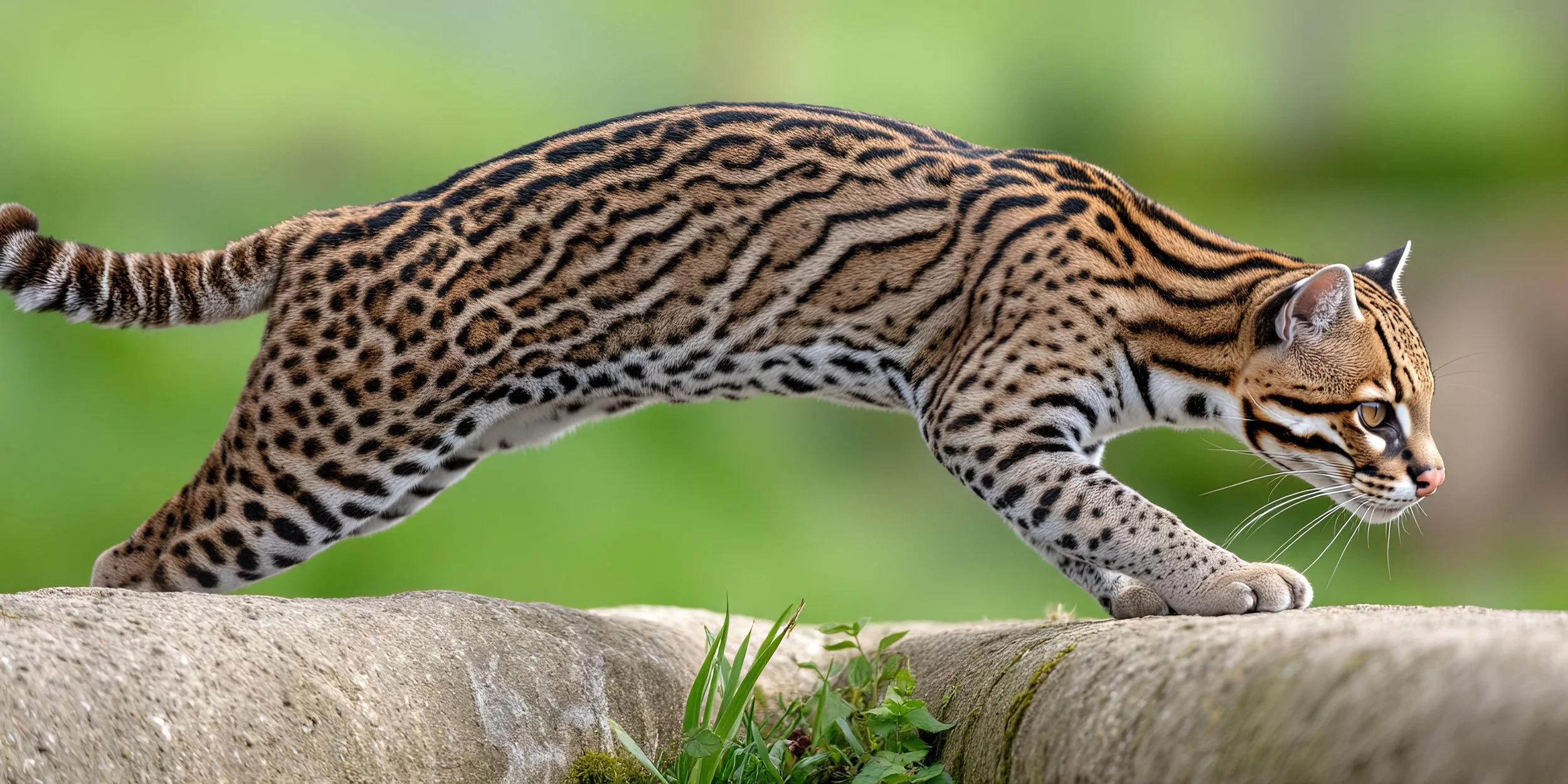
Don’t Miss the Ocelot (hint, it’s a small cat), But Don’t Miss the Joy Either
At FourPoints, we believe in having a plan for our donors. We also believe a good plan needs room to breathe.
The best donor strategy gives us direction without making us rigid. It helps us know where we’re going, what we hope to learn, and how we want to move the relationship forward. But if we grip the plan too tightly, we can miss the very thing we’re trying to create: joy, connection, trust, and a meaningful experience for the donor.
I, Lisa, am a concrete, linear thinker with a task-oriented mindset. Figuring out how to get from point A to point B is something I genuinely enjoy. Give me a goal, a timeline, a map, and maybe a color-coded checklist, and I am having a lovely time.
I have also had to learn to be flexible and to tamp down my “get-it-doneness” for the sake of the journey. I learned this most pointedly on a trip to the zoo.
My friend and I took her stepdaughter, who had never been to the world-famous Fort Worth Zoo. The zoo is laid out beautifully, and if you move through it in the “right” order, you can see a whole lot in a limited amount of time. We were on a set schedule that day, and I really wanted this sweet 10-year-old to have an amazing experience.
So I asked her, “What is the one thing you most want to see?”
Without hesitation, she replied, “The ocelot.”
Well. The ocelot lives in Wild Texas, which is basically the furthest point in the zoo. But I had my assignment. We would head straight to the ocelot, then stop and see other animals on the way back.
A beautiful plan. Efficient. Logical. Very Lisa.
Did I mention she has ADHD?
This sweet child stopped at every exhibit on the way. She crisscrossed the pathway to see the apes, the penguins, the kangaroos, the bird enclosures, and the African horned beasts whose name made her embarrassed. Yes, the dik-dik. And each time she stopped, my stress level rose.
“Okay,” I’d say, trying to sound breezy and not at all like a woman mentally calculating zoo distance, snack needs, and remaining time. “We need to get going.”
Finally, my friend, who is a personnel specialist and also apparently a whisperer of overly focused adults, stopped me and said, “What are you doing?”
My response was easy. “She said ocelot. We’re getting to that ocelot.”
My friend’s reply changed my life: “But she’s enjoying herself. Either we’ll get there or we won’t, but she’ll enjoy the journey.”
Oof.
In that moment, I realized my real goal was not actually “see the ocelot.” That was one indicator of a great day. The real goal was for this child to have a joyful, memorable trip to the zoo. And she was. It just looked different than I expected.
It is a little like that with our goals for donors.
At the end of the day, we are Brokers of Joy. Our job is to help donors find joy in their philanthropy and in the impact they’re having on a mission they already care about. We should have a plan. We should be thoughtful. We should know what we hope to learn, where the relationship might be headed, and what invitation may eventually make sense.
Sometimes the goal is simple: “I’d love to learn why this donor gives and what they care about.” Sometimes the goal is bold: “I’d like to make a six-figure ask.”
Both are valid. But the goal is not the whole story.
If we tear in one direction and miss the donor’s cues along the way, we may lose the joy. Or they will. We may miss the story they’re trying to tell us. We may rush past the moment when trust is being built. We may push for the ocelot when the donor is happily, meaningfully, and vulnerably standing in front of the penguins (or the dik-dik – have I also mentioned my inner child that giggles at inappropriate words?).
There are times we need to pause, reassess, and adapt. The donor may need multiple conversations before they trust us with the true heart behind their gift. They may be interested, but not ready. They may show us that a five-figure ask is more aligned with their current giving arc than the six-figure ask we imagined.
That is not failure. That is relationship. We can adjust.
For me, I have learned to enjoy the journey a little more. To see life, and donor relationships, with a little more curiosity and a little less “march to the destination.” That small bundle of activity, bouncing from exhibit to exhibit in a beautifully non-linear fashion, taught me something I still carry:
Don’t lose sight of the goal. But don’t miss the joy on the way there.